Katola
Wordle-style word game built to preserve the Gorontalo language.
Premise
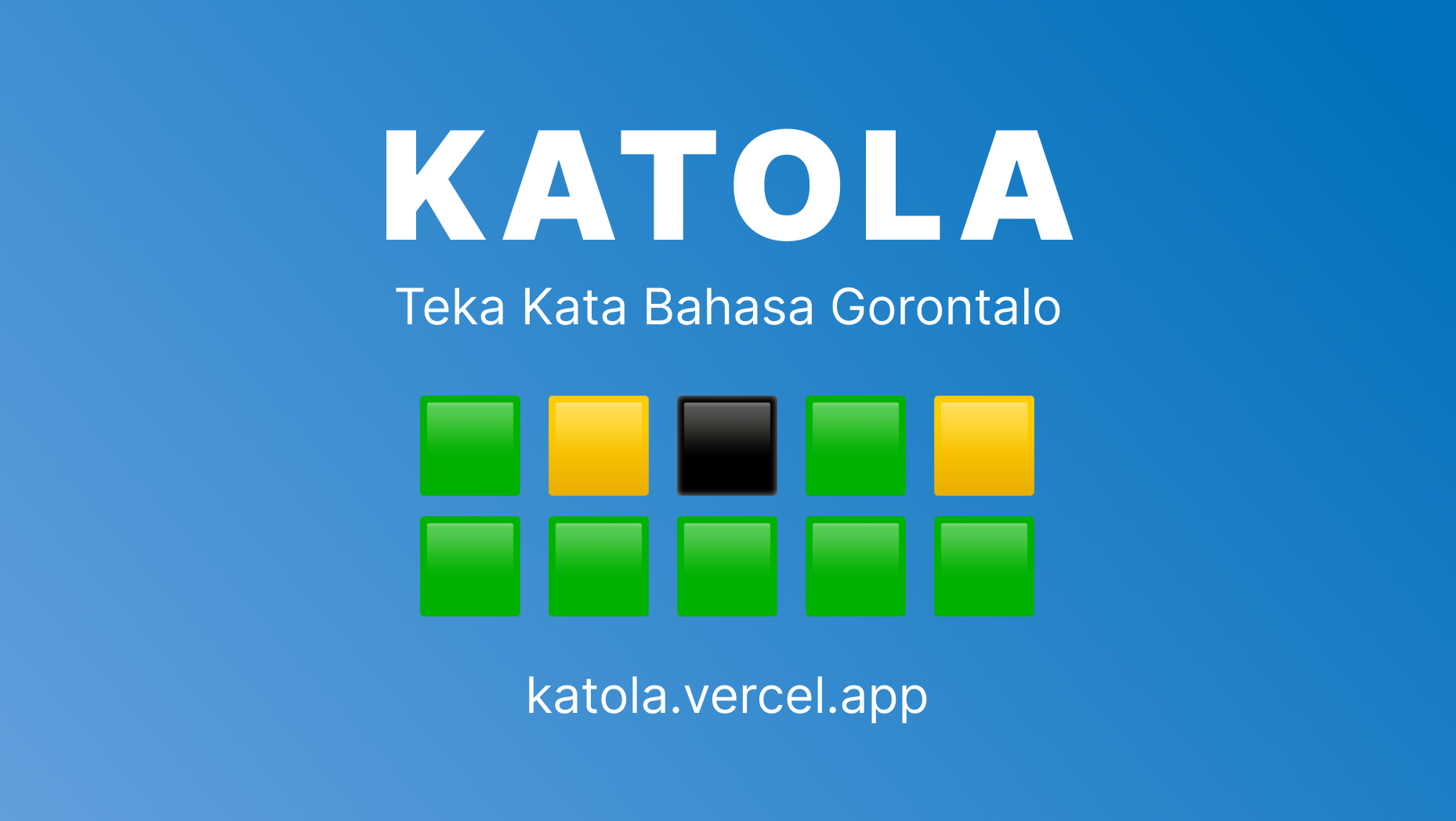
Language is the soul of a culture, yet many regional languages are losing their footing among the younger generation. Katola was born to bridge this gap. Inspired by the global Wordle phenomenon, Katola is a daily word game with a local heart. It is a digital playground for the Gorontalo language, designed to make learning "Hulontalo" feel like play, not a chore.
The ‘Why’
The idea came from a recurring frustration: seeing regional languages fade in digital spaces. Most language learning tools feel heavy and academic; they lack the "hook" that keeps people coming back. I realized that the "daily ritual" of a word puzzle could be the perfect vehicle for cultural preservation. By turning a single word of the day into a competitive, social experience, I wanted to get people engaging with their heritage every single morning—voluntarily and with joy.
What It Does
I designed Katola specifically to handle the nuances of the Gorontalo language:
Dynamic Board: Unlike the original Wordle, Katola supports variable word lengths. Language isn't fixed, and neither is our board—it adapts to the word of the day, whether it’s 4 letters or 8.
Cultural Deep-Dive: Winning isn't just about the green tiles. Once a word is revealed, users get the full context: Indonesian and English translations, pronunciation guides, and cultural notes that explain the word's significance in Gorontalo heritage.
Audio Integration: To ensure users not only see the word but also hear its rhythm, I integrated audio pronunciations for the daily words.
Built for Sharing: It’s about community. The app generates custom achievement cards that users can instantly share to social media, turning a solo win into a cultural conversation.
Frictionless Experience: As a Progressive Web App (PWA), the onboarding is instant. It lives on the home screen and feels like a native app without the friction of an app store download.
Tech Behind the App
The goal was to build a highly polished, reactive stack that could handle real-time updates while remaining easy to maintain:
Next.js & TypeScript: The foundation. Next.js (App Router) provides the performance and SEO benefits needed for a web-based game, while TypeScript keeps the game state predictable and robust.
Supabase: This serves as our powerful backend. I used Supabase to manage the daily word bank and the administrative system where cultural metadata is curated.
Zustand & Framer Motion: For the "feel" of the app. Zustand handles the game state with zero boilerplate, while Framer Motion provides the smooth tile flips and spring-based transitions that make the UI feel premium and alive.
Tailwind CSS: Used to craft a sleek, mobile-first design with a refined Dark Mode, ensuring the game looks stunning on any device.
Vercel: Our deployment platform of choice, ensuring high availability and instant scaling for players across the globe.
What's Next?
This web app still face a problem: lack of words, lack of documentation of the Gorontalo language. So the next step is to build an online documentation of Gorontalo language that can also serve as the content source for Katola.
My Role
Superuser.